
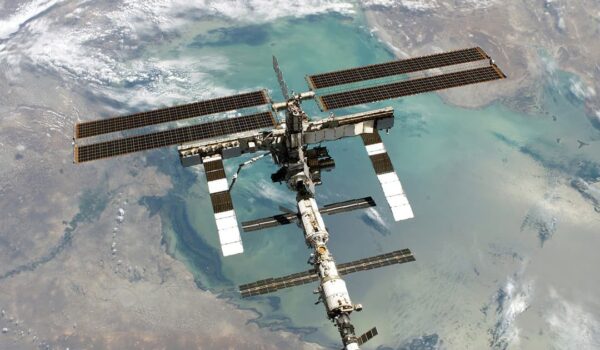
The AMS-01 experiment marked a significant milestone in space exploration and particle physics as the first large magnetic spectrometer to be operated in space. At the heart of AMS-01 was a permanent cylindrical magnet constructed from 6,000 small NdFeB blocks, forming the foundation for its particle detection capabilities.
Subdetectors on AMS-01
AMS-01 was equipped with a range of advanced subdetectors, each serving a critical function in the identification and analysis of cosmic particles:
- Silicon Detector: This component was crucial for measuring the charge and momentum of charged particles. By detecting the sign of the charge, it helped differentiate between various types of particles.
- Time of Flight (ToF): The ToF system measured the velocity of charged particles and provided the trigger for the experiment, ensuring accurate timing for the detection processes.
- Anticounter System: Designed to veto particles that traversed the spectrometer but crossed the magnet walls, this system ensured that only relevant particle data was recorded, improving the accuracy of the measurements.
- Threshold Čerenkov Detector: This detector separated low-velocity particles from high-velocity ones, aiding in the precise classification of particles based on their speeds.
Mission and Data Collection
During its 10-day mission, AMS-01 successfully collected nearly 80 million triggers. These data points were analyzed offline once the experiment hardware was returned to Earth. The thorough analysis of this extensive dataset resulted in a series of highly influential scientific papers, significantly advancing our understanding of cosmic rays and their properties.
Key Publications
The results from AMS-01 were published in a series of well-cited papers, contributing valuable knowledge to the field of particle physics:
- Physics Reports 366: “The Alpha Magnetic Spectrometer (AMS) on the International Space Station: Part I – results from the test flight on the space shuttle” (J. Alcaraz et al., 2002).
- Phys.Lett.B 461: “Search for anti-helium in cosmic rays” (J. Alcaraz et al., 1999).
- Phys.Lett.B 494: “Helium in near Earth orbit” (J. Alcaraz et al., 2000).
- Phys.Lett.B 490: “Cosmic protons” (J. Alcaraz et al., 2000).
- Phys.Lett.B 484: “Leptons in near Earth orbit” (J. Alcaraz et al., 2000).
- Phys.Lett.B 472: “Protons in near Earth orbit” (J. Alcaraz et al., 2000).
- Nucl.Instrum.Meth.B234: “A Study of cosmic ray secondaries induced by the Mir space station using AMS-01” (M. Aguilar et al., 2005).
- Phys.Lett.B646: “Cosmic-ray positron fraction measurement from 1 to 30-GeV with AMS-01” (M. Aguilar et al., 2007).
Conclusion
AMS-01 was a pioneering experiment that set the stage for future space-based spectrometry projects. By successfully operating in the harsh environment of space and collecting invaluable data, AMS-01 demonstrated the feasibility and importance of using space as a laboratory for studying cosmic phenomena. Its legacy continues to influence ongoing research and missions in the field of astrophysics and particle physics.